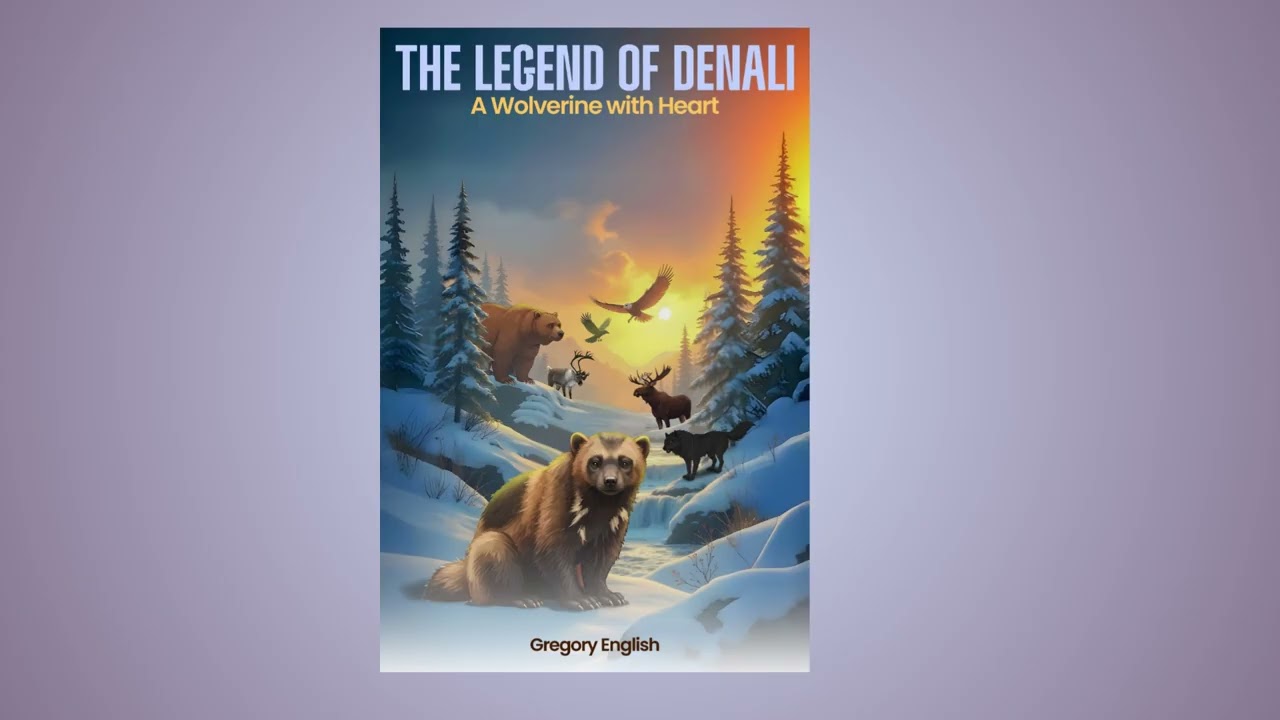
My story takes place in the Alaskan Range rising from the heartland of the Alaska Territory in the late 1800’s. This mountainous region has the highest snow-covered peak in North America, towering 20,310 feet at its summit. Centuries ago, it was named Denali (de-na’-lee), meaning ‘tall’ in the Koyukon language of the native Athabaskan Indians. Their ancestors crossed over the land bridge from Russia and China to inhabit this pristine wilderness. They still inhabit the land today and keep their language alive. The surrounding landscape holds dense forests and expansive tundra full of green foliage. The panorama clearly defines the timberline from a distance as the forest thins out above 12,000 feet. At this high altitude, the air lacks the oxygen necessary for vegetation to survive, leaving only rockslides and boulders reaching for the sky. Native Quaken Aspen trees flourish on the southern slopes with smooth greenish-white bark. The mighty Sitka spruce trees tower up to 225 feet tall and can thrive for 500 years.
The terrain transforms with the seasons. Spring and Summer provide a pristine refuge sustaining life for all its inhabitants, including brown bear, caribou, moose, Dall sheep, beaver, muskrat, squirrel, hare, rabbit, wolf, ptarmigan, raven, eagle, wolverine, geese, duck and many varieties of freshwater fish including salmon. All wildlife thrives at this time of year. For weeks in late Summer, the sun never sets, allowing vegetation to get plenty of sunshine. Many call it the land of the midnight sun. However, the long days are soon ending. Only the mountain peaks remain covered by last winter’s snow. Wherever there is shade, you can find frozen white patches that remain. The rest has melted off the mountains flowing into the mighty Yukon River and its tributaries. The mighty river runs east to west, then southward, winding a snake-like path through this mountainous wilderness and across the coastal plains to empty into the Bering Sea and Gulf of Alaska. During the spring thaw a few months ago, their earthen banks filled with roaring rapids impossible to cross. Fallen trees and debris were carried away by the strong current many miles downstream, creating piles along the bank. Gradually, the water levels recede through summer, allowing the mighty rivers to reveal their rocky bottom and places to cross again. Each year thousands of caribou migrate with the seasons traveling hundreds of miles from north to south. Winter is long and brutally cold with temperatures reaching 40 degrees below zero. Rivers freeze and the ground freezes solid down four feet below the surface. As the spring thaw begins the mature Salmon begin their long journey traveling from the Bering Sea and Gulf of Alaska fighting their way upstream against the strong currents. They reach the calm streams of the head waters to spawn many hundreds of miles inland where they were born. The mature adults die as millions of baby salmon are born and thrive through the warm months of summer. As fall begins they follow their instinct to swim down river to the sea to grow into mature adults feeding all winter. Then the cycle starts all over again. Of course, their presence in the river provides food for both animals and Indians. In these late years of the nineteenth century, white men will invade the land when gold is discovered changing this virgin landscape and natives forever. My next book will explore the effect of the Klondike Gold Rush through the eyes of Denali and those he meets. In spite of the greed, cruelty and selfishness he encounters, Denali shows there is a way to survive with kindness and doing what is right.